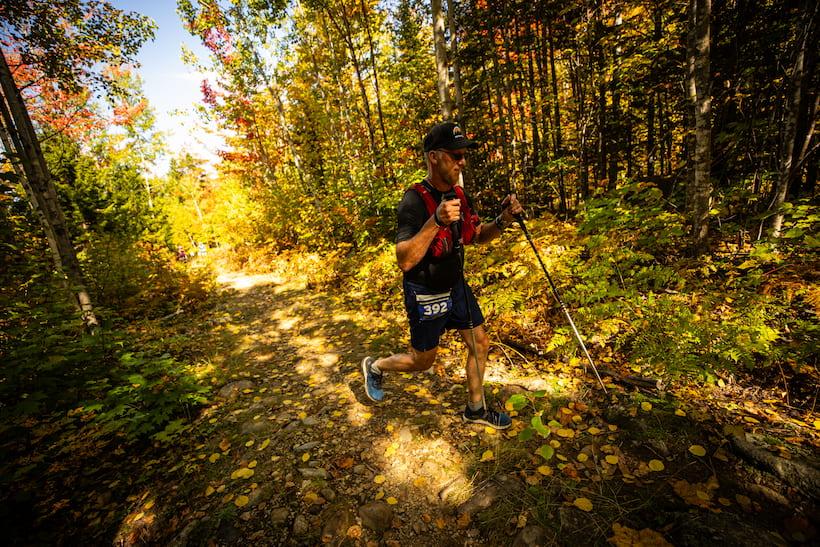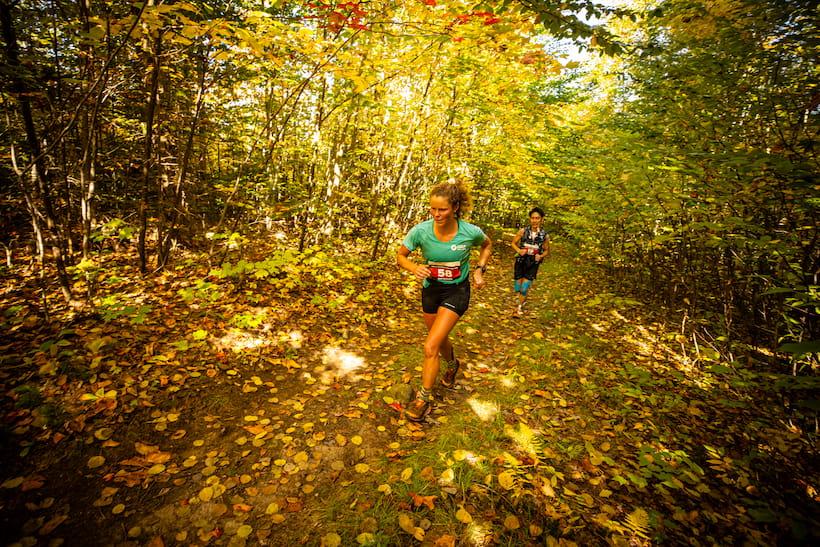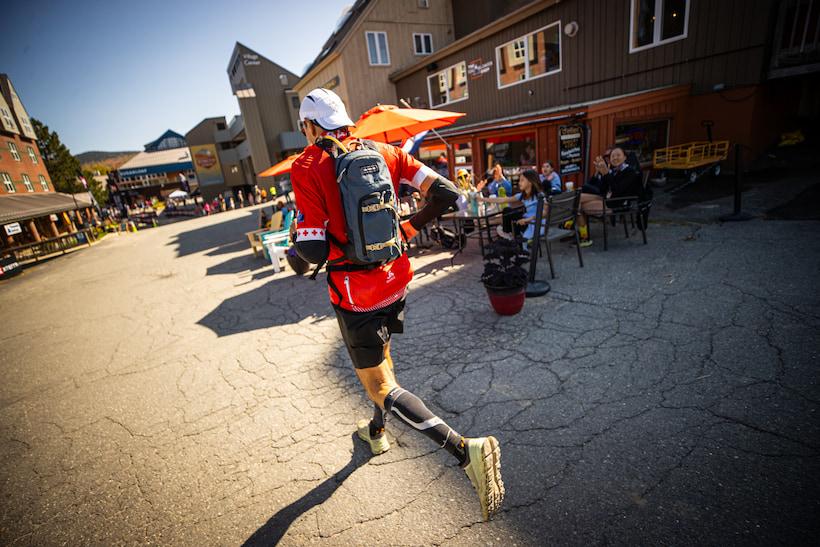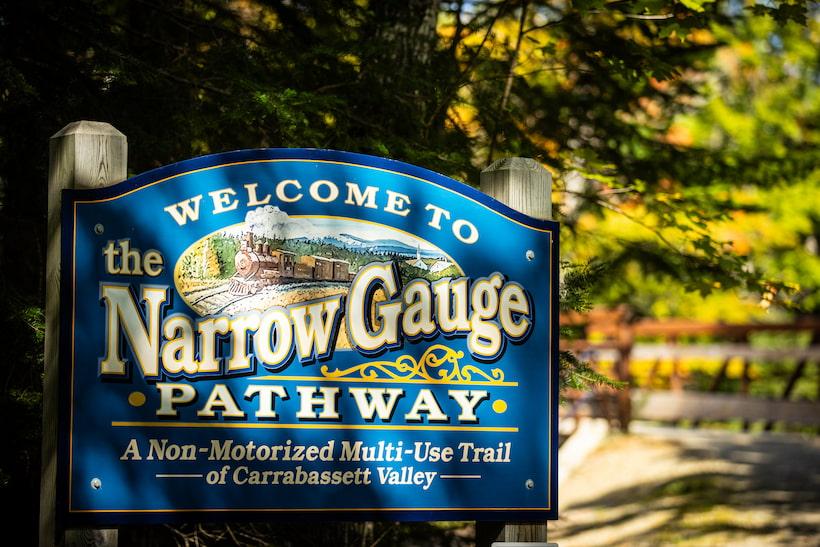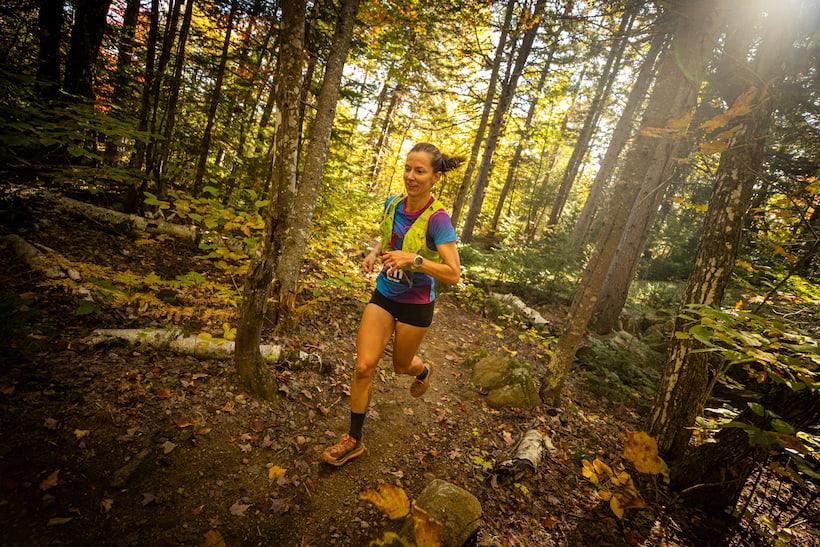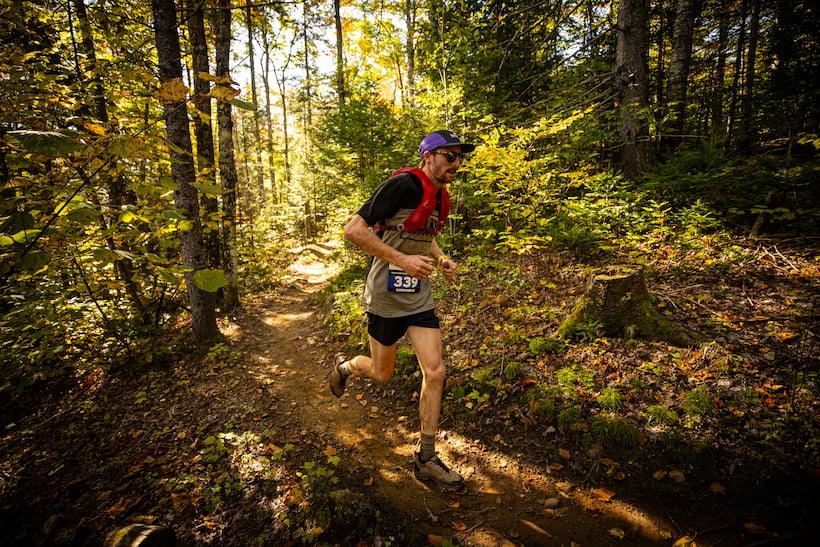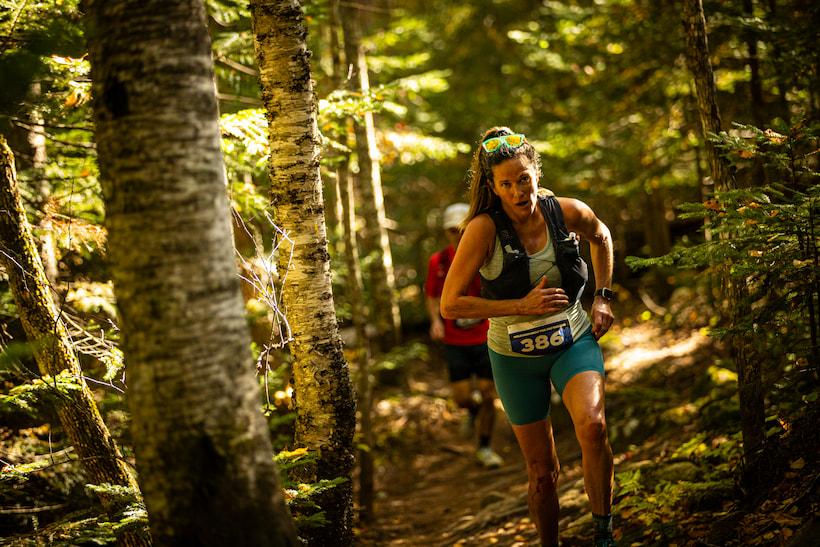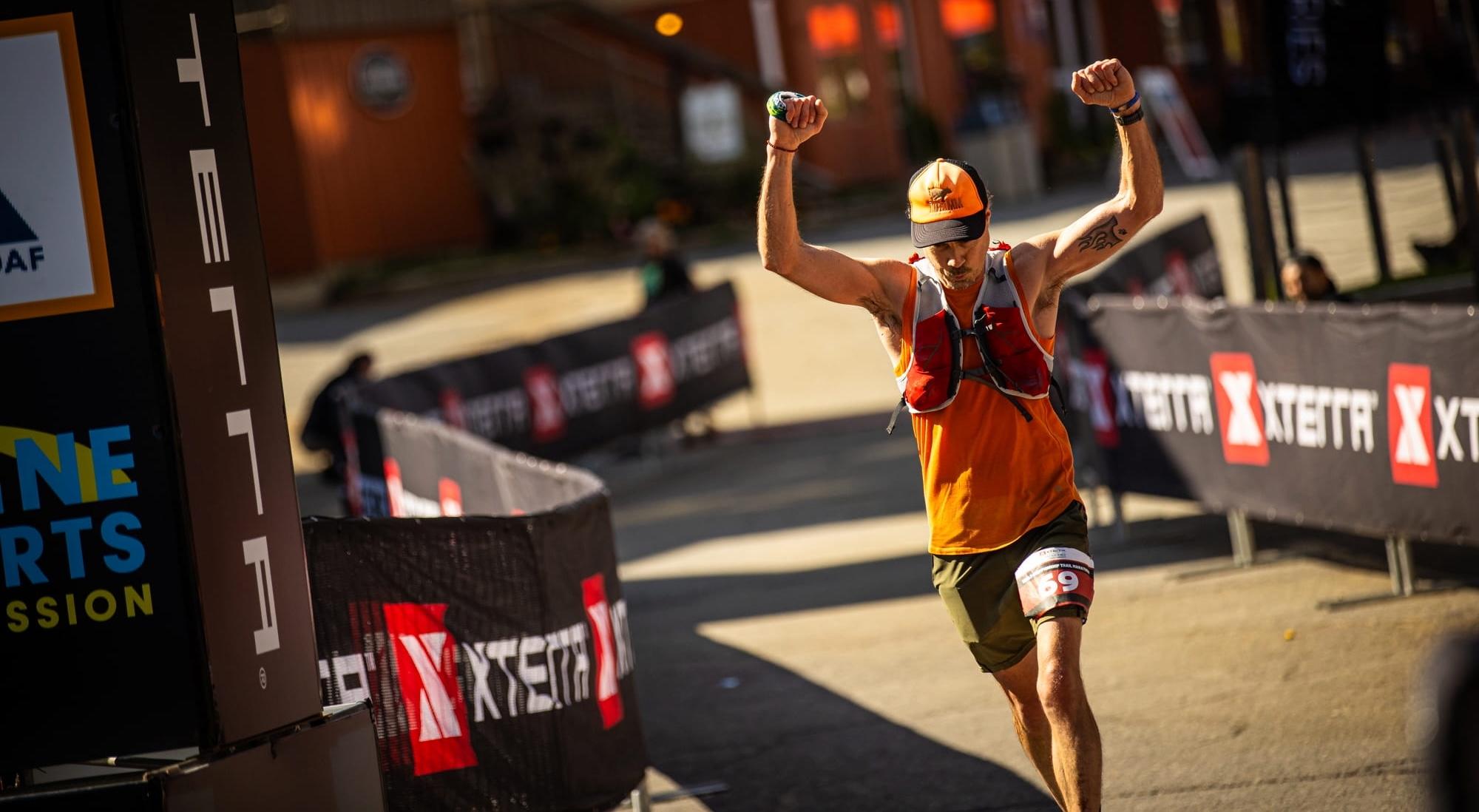
“I didn’t think I’d find someone else out here whose shoes looked worse than mine,” said the runner next to me, grinning. Looking down, I could see my big toe poking through a sizable hole at the top of my trail running shoes. The seams were failing around the sides, and the color scheme, once a bright sunset palette of reds and oranges, had faded to something more reminiscent of rust and mud. I had worn them down traversing Maine’s mountain roads and singletrack across several hundred miles of dense old-growth and rugged coastline. Now, I would be putting those shoes (and myself) to the test along the undulating dirt trails of the Carrabassett Valley.
I had learned about the XTERRA Trail Run World Champs event two weeks prior and eagerly signed up for the Sugarloaf Half Marathon, a qualifier for the World Championship the following year. What initially drew me to take part was the opportunity to race alongside elite athletes on world-class trails, or at least have the chance to stand alongside them at the starting line. Standing on that starting line, seeing the World Champs competitors ready to go, suddenly I wanted more.
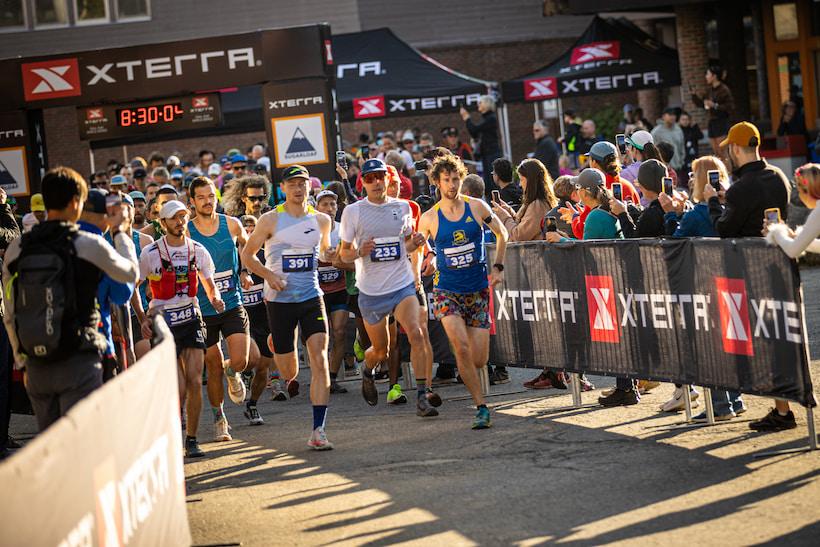
Right then, I set my sights on a top six slot in my age group (30-34), which would secure me a spot at next year’s World Championship race. Between me and that spot stood an immediate 750M climb up Sugarloaf, Maine’s iconic ski mountain, followed by a rapid, quad-busting descent back into the valley. This was Maine, after all. The trails would be steep, with little consideration for the kinds of switchbacks and steady grades more common in the western U.S.